
CCTV Cameras in NYC 2026 | Active Public Sensor Matrix
Navigating the dense architectural landscape of New York City reveals an environment increasingly defined by pervasive digital observation. As municipal agencies and private real estate entities rapidly modernize physical security infrastructure, tracking the deployment parameters of active network endpoints remains a complex task. For property managers, business operators, and compliance officers, understanding the distribution of CCTV Cameras in NYC 2026 is no longer just a matter of operational awareness—it is a baseline requirement for structural liability management and physical asset protection.
Across all five boroughs, the intersection of public right-of-way monitoring and commercial property surveillance has created a highly fragmented data environment. Traditional mapping resources routinely fail to differentiate between municipal traffic monitoring feeds, automated transit security grids, and edge-computing private business installations. This independent registry serves to catalog, verify, and map raw sensor positions, providing structural transparency in a market historically driven by corporate secrecy and unvetted contractor deployments.
Decoding Municipal Surveillance and Network Infrastructure
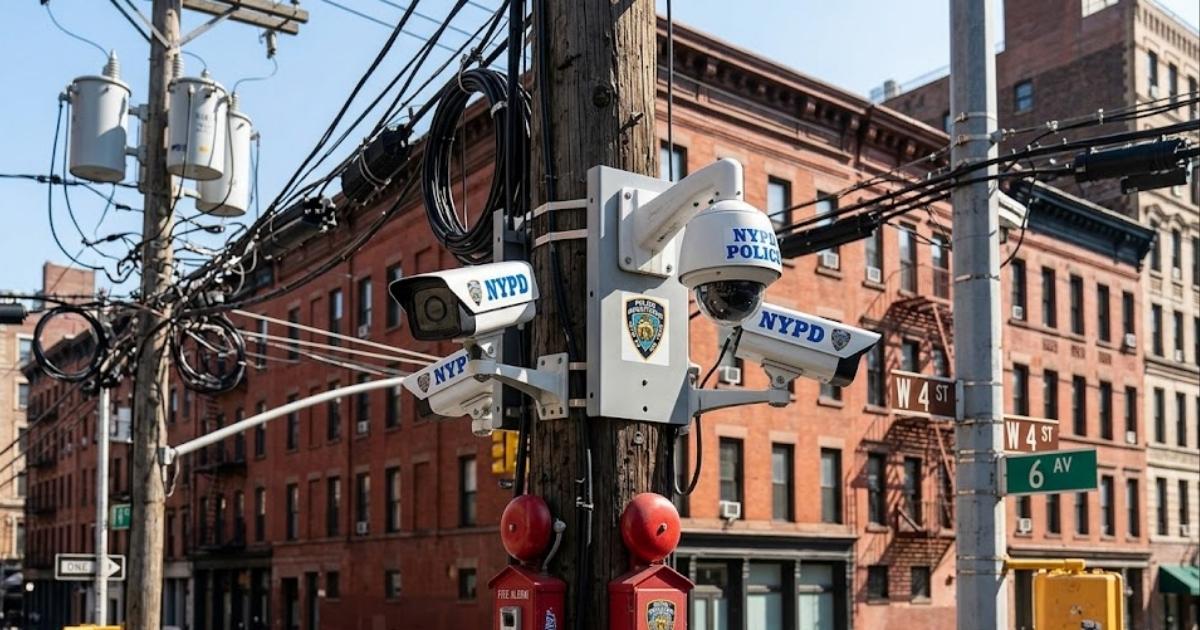
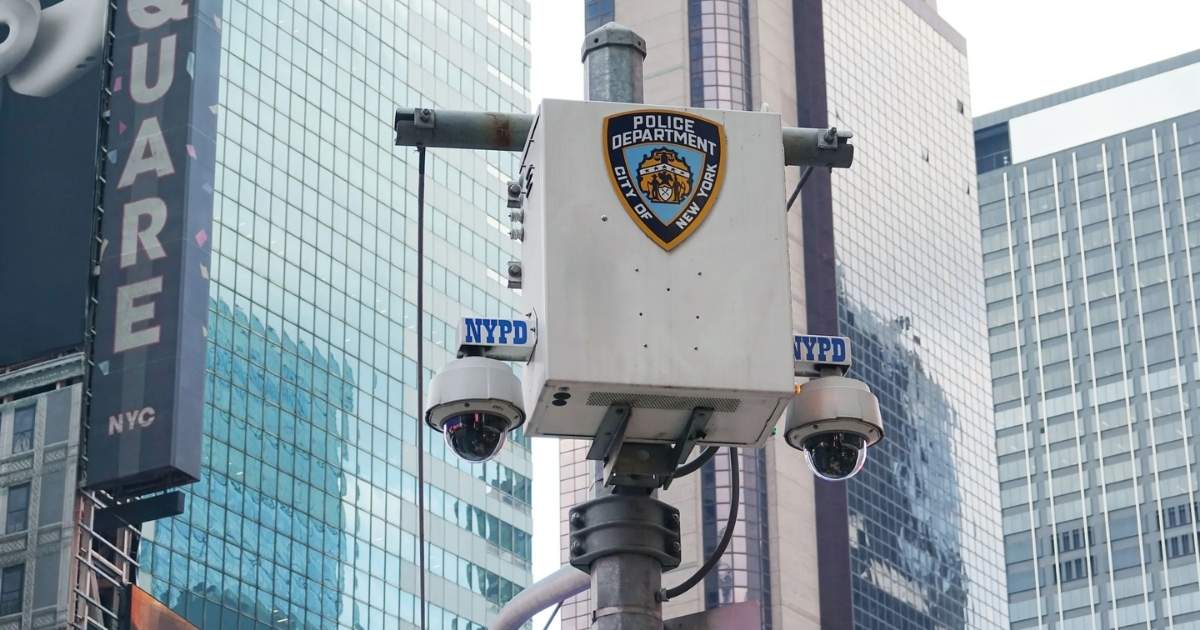
A critical challenge in evaluating local security camera density lies in isolating the various institutional tracking backbones operating simultaneously throughout the metropolitan space. The primary layer of public observation is anchored by the NYPD Argus network—a highly centralized system of domain-awareness sensors mounted prominently at major commercial intersections and transit hubs. These devices are explicitly engineered for long-range optical capture and are directly backhauled into municipal monitoring hubs, bypassing standard localized storage nodes entirely.
Subterranean Transit Layers and Biometric Tracking
Simultaneously, the Metropolitan Transportation Authority (MTA) maintains an isolated subterranean network layer. This framework is rapidly transitioning toward high-resolution biometric analytics and edge-AI analysis matrices designed to track platform ingress, egress, and general passenger flow patterns. When business owners deploy private surveillance camera installers to protect storefront properties, their exterior lenses frequently capture these public pathways. This overlap creates complex legal data loops that require precise alignment with regional compliance frameworks to avoid severe municipal liability exposure.
Commercial Intersections and Private Link Integrations
Beyond the institutional perimeters of the MTA and municipal safety networks, a massive gray market of data sharing has emerged via private link integration frameworks. Modern commercial retail hubs, corporate campuses, and business improvement districts (BIDs) across Manhattan and Brooklyn are increasingly deploying advanced perimeter surveillance nodes that pipe directly into localized neighborhood data exchanges. These hybrid arrays often combine high-resolution multi-sensor lenses with localized artificial intelligence modules capable of tracking behavioral anomalies or crowd velocities before transmitting metadata summaries over dedicated commercial fiber links.
This deployment trend complicates the physical auditing of CCTV Cameras in NYC 2026. Property owners installing standard commercial systems must map out how their local infrastructure communicates over open public networks. Unvetted third-party security installers frequently deploy hardware pre-configured with active cloud-backhaul loops that stream unencrypted data out-of-state, inadvertently placing corporate networks in direct conflict with local multi-tenant data governance directives and corporate insurance compliance mandates.
| Borough / Sector | Neighborhood / Cross-Street | Sensor Classification & Network | Status / Agency |
|---|---|---|---|
| Manhattan Central | SoHo — Broadway & Prince St | Multi-Sensor Dome IP (4K, 30FPS, H.265) | NYPD Argus |
| Manhattan Central | Tribeca — Broadway & Canal St | PTZ Vari-Focal Optical Matrix (PoE+) | MTA Transit |
| Manhattan Central | Midtown — 42nd St & 7th Ave | Biometric Facial Recognition Grid Layer | NYPD Argus |
| Brooklyn Kings | DUMBO — Front St & Washington St | Fixed Commercial Bullet Array (IP67) | Private Edge |
| Brooklyn Kings | Williamsburg — Bedford Ave & N 6th St | High-Density Dome Surveillance Lens | NYPD Argus |
| Brooklyn Kings | Downtown — Flatbush Ave & Fulton St | PTZ Traffic Monitoring Backhaul Node | DOT Infrastructure |
| Queens Entry | Astoria — 31st St & Ditmars Blvd | Multi-Directional Overhead Sensor Drop | Commercial Hub |
| Queens Entry | Long Island City — Vernon Blvd & 50th Ave | Wired Low-Voltage License Plate Reader | NYPD Argus |
| Queens Entry | Flushing — Main St & Roosevelt Ave | Enterprise AI Edge Array (H.266 Codec) | Private Corporate |
Privacy, Compliance, and the 2026 POST Act Manual
Deploying optical capture technology within the geographic boundaries of New York City mandates strict adherence to complex statutory disclosure frameworks. Under the updated parameter tracks of the Public Oversight of Surveillance Technology (POST Act), municipal operations must maintain transparent operational charters for all tracking tools deployed in public spaces. While private commercial installations are exempt from direct public reporting mandates, they face unique data-retention challenges and civil privacy claims if their field of view captures public walkways without clear signage.
Auditing Commercial Property Boundaries and Fines
Corporate facilities managers must audit their camera placement logs to ensure zero structural penetration into adjacent residential windows or protected commercial boundaries. If a system records data outside your property line, local statutes grant legal standing for enforcement audits. Partnering with certified, NYS Department of State-licensed low-voltage integration firms protects building assets from summary structural violation notices issued during Department of Buildings (DOB) code inspections.
Landmark Preservation Codes and Exterior Wire Paths
For building engineers managing assets within New York City’s historical zones, such as the SoHo-Cast Iron Historic District or classic brownstone corridors in Brooklyn Heights, physical exterior structural updates face intense regulatory oversight. The Landmarks Preservation Commission (LPC) enforces strict rules governing the mounting, visibility, and routing of external hardware housings and conduit tracks. Security integration teams cannot simply drill anchoring bolts into historic brickwork or trail exposed low-voltage cables down structural masonry façades without triggering severe structural stop-work orders and multi-thousand-dollar code violation fines.
Achieving compliance requires specialized installation techniques that utilize hidden wire tracking pathways, custom-tinted conduit materials that match building facades perfectly, and interior masonry penetrations that preserve outer architectural features. When evaluating commercial surveillance camera installers near me, property teams must verify that the contractor possesses documented experience handling historic building envelopes and navigating LPC permit workflows. Failing to confirm these legal qualifications can trap a real estate entity in a months-long legal battle with the city, completely halting site modernization projects and risking structural building fines.
Hardware Engineering and Storage Architectures for CCTV Cameras in NYC 2026
From an operational integration perspective, managing city-wide surveillance feeds requires an architecture designed for high throughput and long-term data stability. Standard commercial setups across the five boroughs are shifting away from localized physical network video recorders (NVR) toward hybrid edge-cloud infrastructure models. This deployment layout optimizes processing bandwidth across commercial broadband lines, reducing data transport latencies while maintaining compliance with insurance storage retention baselines.
Video Compression Protocols and Power Delivery Standards
Furthermore, transitioning from legacy H.264 video compression to modern H.265 or AV1 encoding matrices has slashed storage requirements by up to 50% without compromising image clarity. This technical optimization allows property operators to maintain crisp 4K multi-sensor recordings for the standard 30-to-90-day retention loop without triggering bandwidth or data overages. By prioritizing wired Power over Ethernet (PoE/PoE+) pathways over unreliable wireless links, enterprise assets insulate their security data pipelines from localized RF interference patterns common to high-density Manhattan commercial zones.
Cyber Security hardening of Enterprise Sensor Links
As the sheer volume of CCTV Cameras in NYC 2026 expands, the physical security perimeter is heavily tethered to cybersecurity hygiene. Legacy surveillance architectures that rely on generic default credentials and outdated firmware create significant network entry vulnerabilities within enterprise building automation systems. Modern system hardening requires low-voltage engineers to implement strict endpoint access controls, isolate camera traffic onto dedicated virtual local area networks (VLANs), and enforce end-to-end cryptographic encapsulation using 802.1X network authentication protocols.
Furthermore, commercial setups must be actively audited for physical port vulnerabilities. Outdoor network switches and exposed PoE drops provide an open invitation for malicious actors to physically intercept physical data cables, tap directly into the building’s central infrastructure, or run denial-of-service scripts against processing clusters. By utilizing specialized tamper-resistant locking junction boxes, disabling unused switch ports at the managed layer, and scheduling automated firmware upgrades, enterprise asset managers can protect their physical observation footprints from both localized physical tampering and cloud-level data exfiltration risks.